

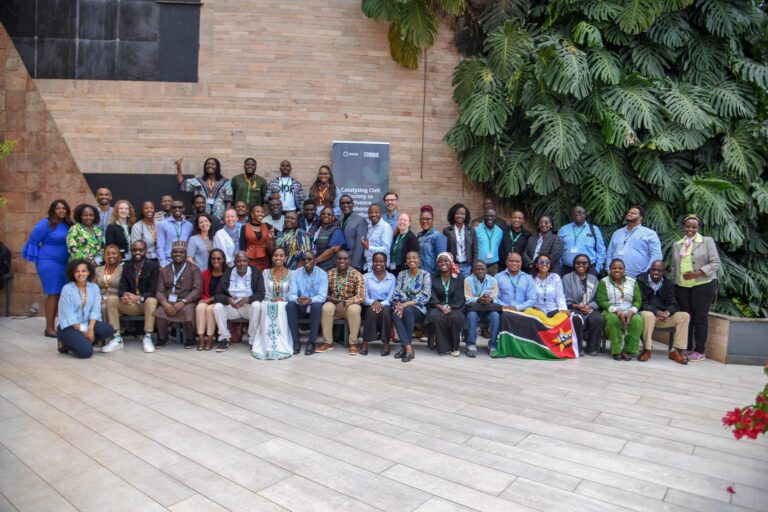
In late April 2026, we had the privilege of participating in the bootcamp Catalyzing Civil Society to Advance Collaborative Surveillance for a Resilient Africa, held on the sidelines of the World Health Summit Regional Meeting. Convened by Resolve to Save Lives (RTSL) and the Resilience Action Network Africa (RANA), this gathering brought together civil society organizations, government representatives, regional institutions, technical partners, and media from across the continent.
The timing could not have been more critical. Africa continues to navigate intersecting threats, from infectious disease outbreaks and climate shocks to fiscal pressures that stretch already strained health systems. The bootcamp offered a rare space to move beyond rhetoric and collectively examine what it will take to build surveillance systems that are truly community-centered, domestically financed, and collaboratively governed across borders.
“Surveillance is not just a technical issue – it is a social contract. It depends on trust, inclusion, and meaningful community engagement.”
What we discussed
Over the course of the bootcamp, participants examined Africa’s current epidemic preparedness landscape, surfaced country-level experiences, and explored practical pathways toward domestic resource mobilization. A central theme was the recognition that outbreaks are still detected too late, surveillance systems remain fragmented, and financing for preparedness is too often unpredictable and externally driven.
Discussions underscored that communities, including informal providers, clinicians, and local networks, are the first line of detection and response. Strengthening their role is not a secondary consideration; it is the foundation of any resilient surveillance system. The bootcamp also highlighted the compounding effects of climate change, conflict, and displacement on both formal and informal health infrastructure across the region.
The Nairobi Declaration
A landmark outcome of the convening was the issuance of the Nairobi Declaration on African Health Security and Collaborative Disease Surveillance, signed by civil society and community organizations gathered at the event. The Declaration sets out a shared vision of an Africa where no outbreak goes undetected, where every community has the tools, trust, and channels to raise the alarm early and enable a rapid, coordinated response.
The Declaration calls on African Heads of State to elevate health security to the highest level of political leadership, urges continental and regional bodies to operationalize cross-border collaborative surveillance, and commits civil society to sustained advocacy, accountability, and coalition-building across health, finance, climate, gender, and justice sectors. It also calls for a biannual continental accountability mechanism to track member state commitments and progress toward domestic ownership of surveillance systems.
Dumaic Global Health’s contribution
Dumaic Global Health was invited to this dialogue in recognition of our hands-on work in health system strengthening for epidemic preparedness. Our participation was an opportunity to bring that practical experience to bear on a continent-wide conversation and to reaffirm our commitment to African-led, community-powered approaches to health resilience.
Looking ahead
The bootcamp marked the beginning of a broader effort. As signatories to the Nairobi Declaration, we are committed to advancing advocacy around community-centered surveillance, amplifying community perspectives in national and regional policy spaces, and tracking progress on the commitments made. The Declaration signatories have committed to reconvening within one year to review implementation, and we will be there.
Health security is a public good. Preparedness cannot remain a peripheral technical issue or a donor-defined project. We leave the bootcamp with renewed resolve to do our part in building the surveillance systems Africa needs and deserves.